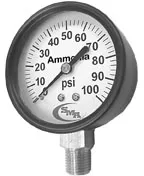
When you’re running anhydrous ammonia for side-dress or pre-plant applications, knowing your system pressure can mean the difference between even coverage and hot spots that burn your crop. This ammonia-specific pressure gauge gives you accurate readings so you can dial in your application rate and keep everything running smoothly, whether you’re pulling a nurse tank across corn stubble or making precision strips for next season’s beans.
What You’re Getting
- Specialized ammonia-compatible design that won’t corrode or fail from chemical exposure
- Dry-filled construction eliminates the freeze risk of liquid-filled gauges during cold weather applications
- Enameled steel case stands up to the rough conditions of field work and chemical exposure
- Stainless steel connection threads resist corrosion and provide reliable sealing
- Clear acrylic lens stays readable even after seasons of dust and chemical residue
Built for Real Farm Work
This gauge fits right into your anhydrous ammonia application system, whether you’re running a toolbar, cultivator-mounted applicator, or nurse tank setup. The 160 PSI range covers the typical operating pressures for most field application equipment, giving you the monitoring you need for consistent fertilizer placement and rate control.
Made to Last
Ammonia is tough on equipment, but this gauge is built specifically for chemical service. The dry fill design won’t freeze up during early spring or late fall applications, and the materials are chosen to resist the corrosive effects of anhydrous ammonia over years of use.
Good to Know
The standard 1/4 inch male NPT connection threads right into most ammonia system fittings. Mount it where you can see it from the tractor seat – monitoring pressure helps you catch problems before they affect your application or damage your equipment. A quick visual check tells you if your system is maintaining proper pressure for consistent coverage.