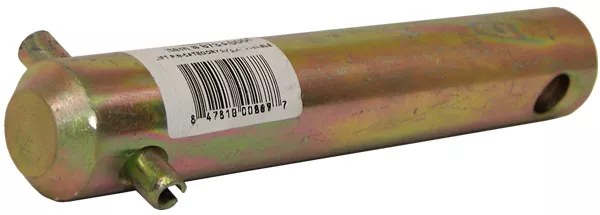
If you’re running a compact or utility tractor with Category 1 three-point hitch, you know how important it is to have the right pins when it’s time to hook up your implements. Whether you’re switching from your bush hog to a box blade or need to connect that rotary cutter for some roadside mowing, this 7/8 inch draw pin is what makes it all happen. When your old pin gets bent or goes missing in the weeds, you need a reliable replacement that’ll handle the job without breaking the bank.
Key Features
- Standard 7/8 inch diameter fits all Category 1 three-point hitch lower links perfectly
- 3-3/4 inch usable length gives you plenty of clearance for proper hookup and adjustment
- Heavy-duty construction stands up to the stress of field work and daily use
- Direct replacement design means no modifications or adapters needed
Built for Real Farm Work
This pin is designed for Category 1 three-point hitches found on compact and utility tractors up to about 65 HP. Whether you’re hooking up a finish mower, cultivator, disc harrow, spreader, or post hole digger, this pin connects your implement’s lower link to your tractor’s lift arms. It’s the same size that came on your tractor from the factory, so you know it’ll fit right and work like it should.
Made to Last
Farm equipment takes a beating, and hitch pins are no exception. This AgSmart pin is built to handle the side loads, vibration, and stress that comes with connecting heavy implements to your tractor. The steel construction resists bending even when your implement catches on something or you’re working on uneven ground.
Installation Notes
This is a straight replacement for your original pin—just slide it through the lower link and secure with your lynch pin or clip. Keep a light coat of grease on the pin so it slides in and out easily when you’re changing implements. Having a spare in your toolbox means you’ll never get stuck in the field with an implement you can’t hook up.